Centering Local Communities: Sustainable Tourism through Service Design
Capstone Project for Service Design Network Practitioner Certification
Tools + Skills: Service Design • Design Thinking • UX Research • Co‑Design • Journey Mapping • Service Blueprinting • Prototyping
Summary
This capstone project explores how service design can support sustainable tourism by centering local communities during conferences. Through stakeholder interviews, co‑design workshops, and prototyping, our team developed a voucher‑based system that connects corporate sponsors with local businesses to drive economic, cultural, and environmental impact. The final solution offers a scalable approach to making tourism more inclusive and community‑centered.
The Challenge
With overtourism increasingly straining infrastructure, economies, and ecosystems, our team reframed sustainability beyond just environmental concerns—encompassing local economy, culture, and stewardship.
We reframed the design challenge as:
“How might we prioritize the economic wellbeing of local communities to foster sustainability during a local conference?”
We defined sustainability not just in environmental terms, but as a balance between local economy, local culture, and environmental stewardship.
The Approach
Preliminary desktop research was conducted to understand some of the existing general issues of overtourism (or non-sustainable tourism). The additional tools we relied on included:
• Stakeholder Map
• P.O.I.N.T. Analysis
• Re-framing
• Interviews
• Story Hooks
• User Personas
• Journey Maps
• Service Blueprint
• Prototyping
-
![]()
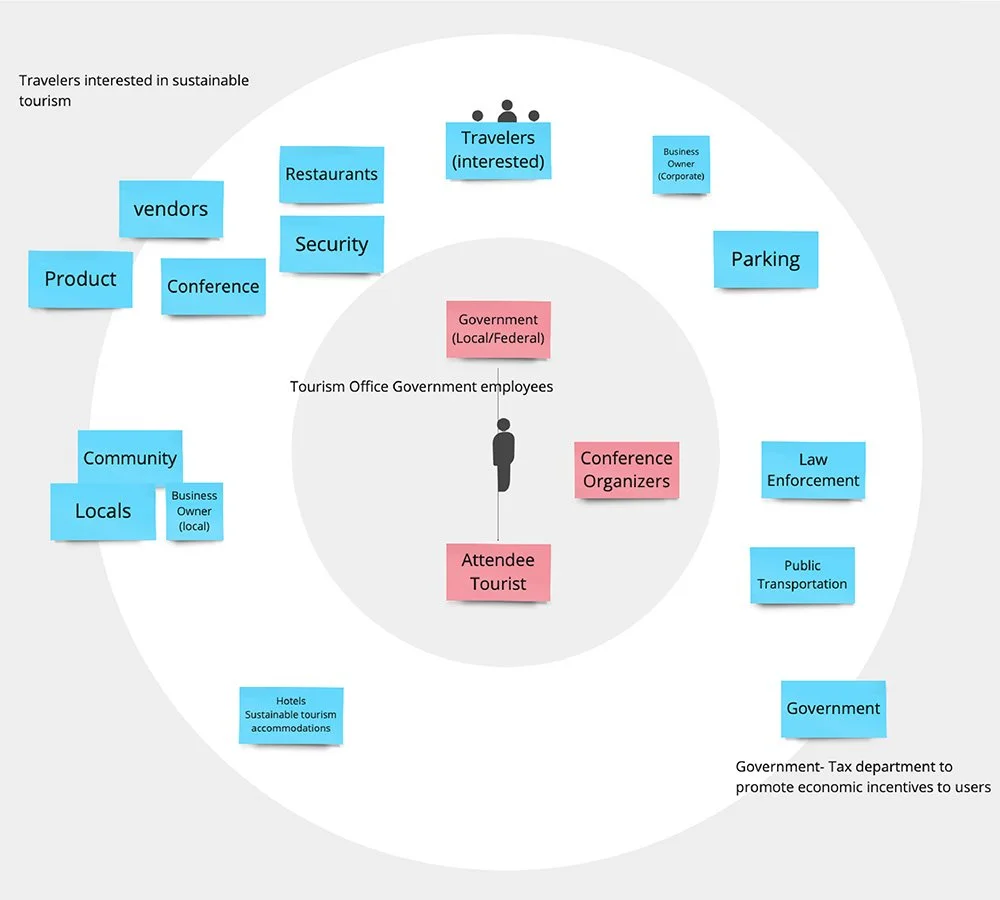
Stakeholder Map
The Stakeholder Map not only helped us identify the initial key actors, it allowed us to reframe the original challenge presented to us.
-
![]()
Interviews
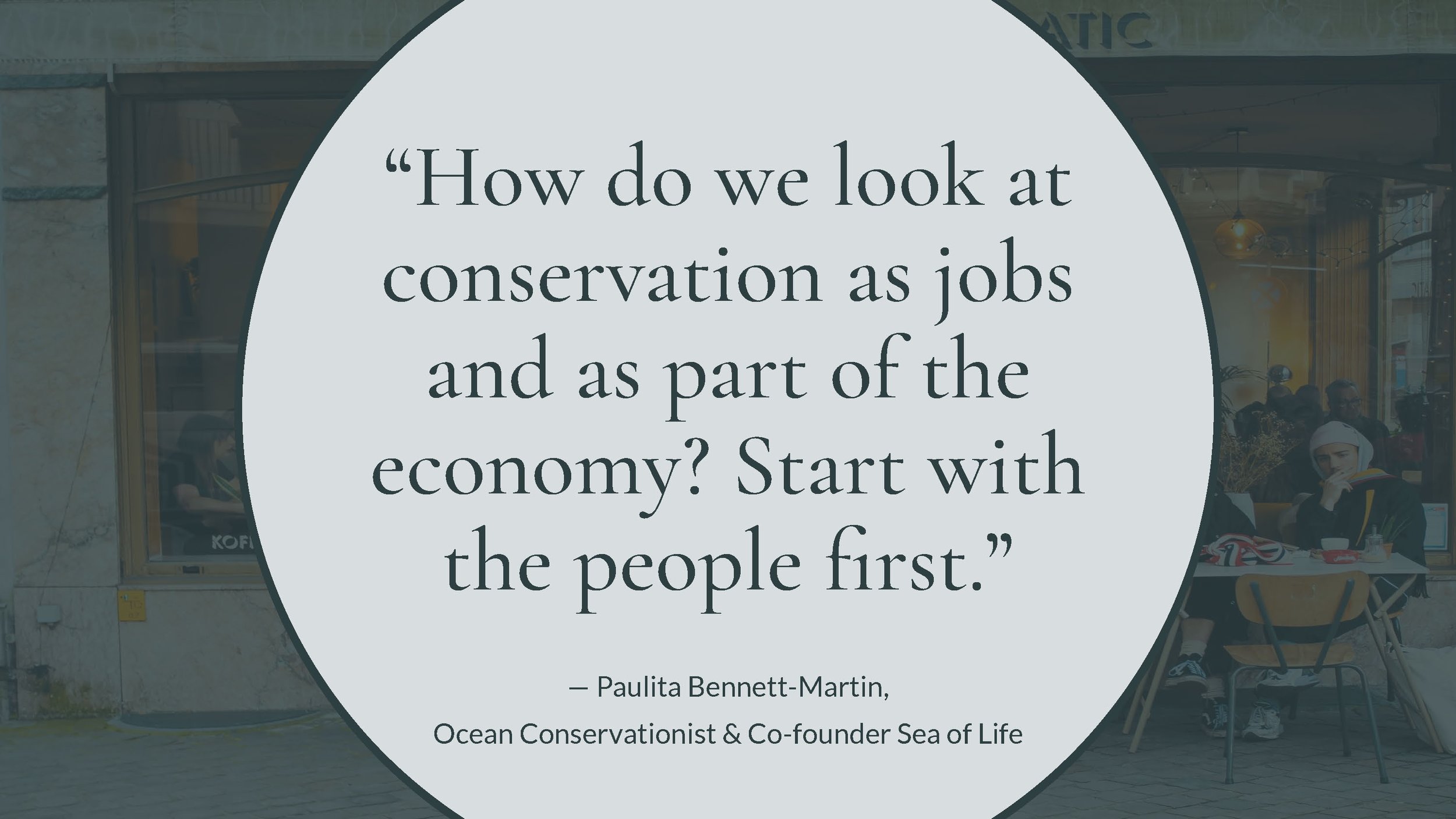
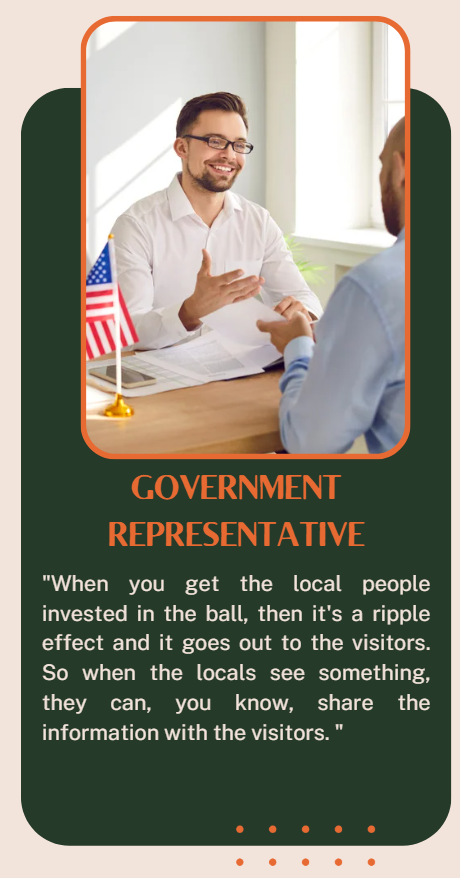
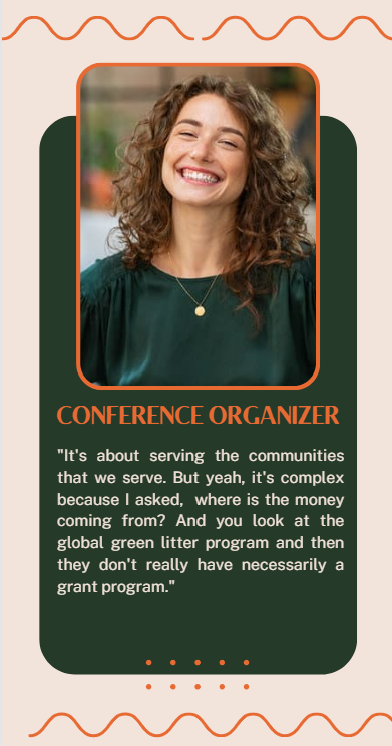
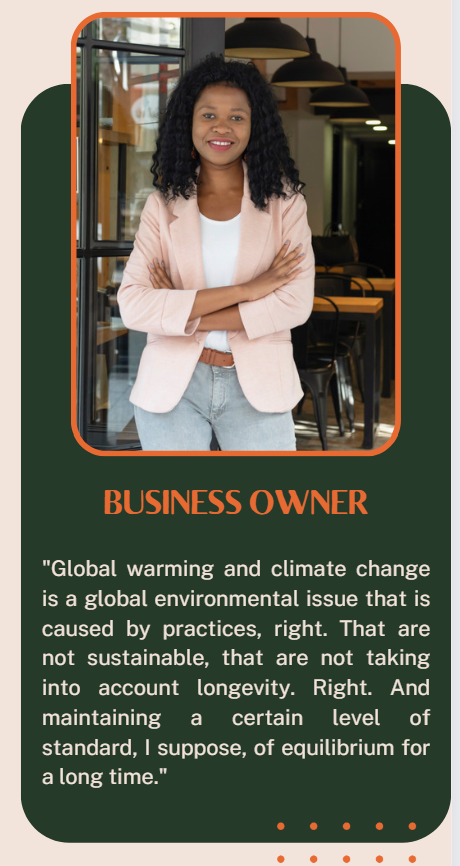
We conducted 8 interviews which included local government staff, sustainable business owners, tourism experts, and conference organizers.
It was through these interviews we began to see the immense need to focus on local businesses that are a vital part of nearly any town or city's ecosystem.
-
![]()
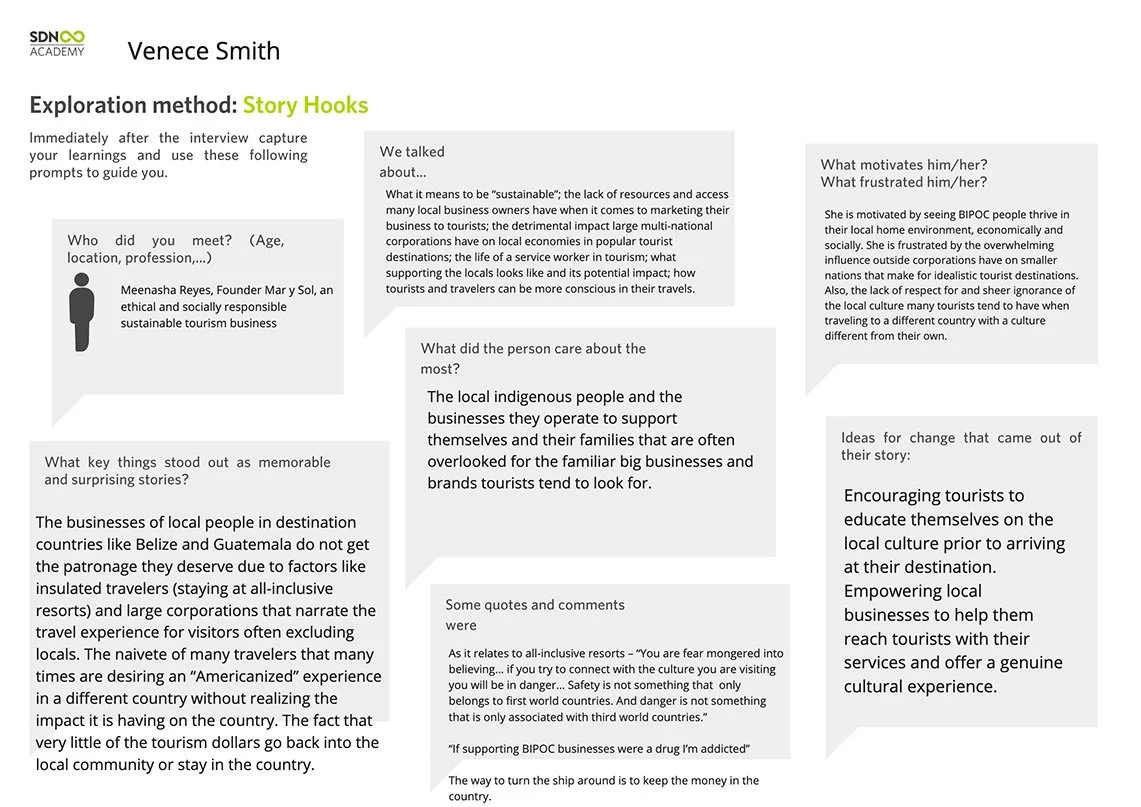
Story Hooks
Key takeaways from interviews were synthesized into story hooks to inform ideation.
Personas
Three personas were created to represent key stakeholders—conference attendees, local business owners, and government partners—with collaborative goals.
Journey Maps
Journey maps became a valuable tool to understand some of the needs of our personas. (Click to enlarge).
Co-Design Workshop
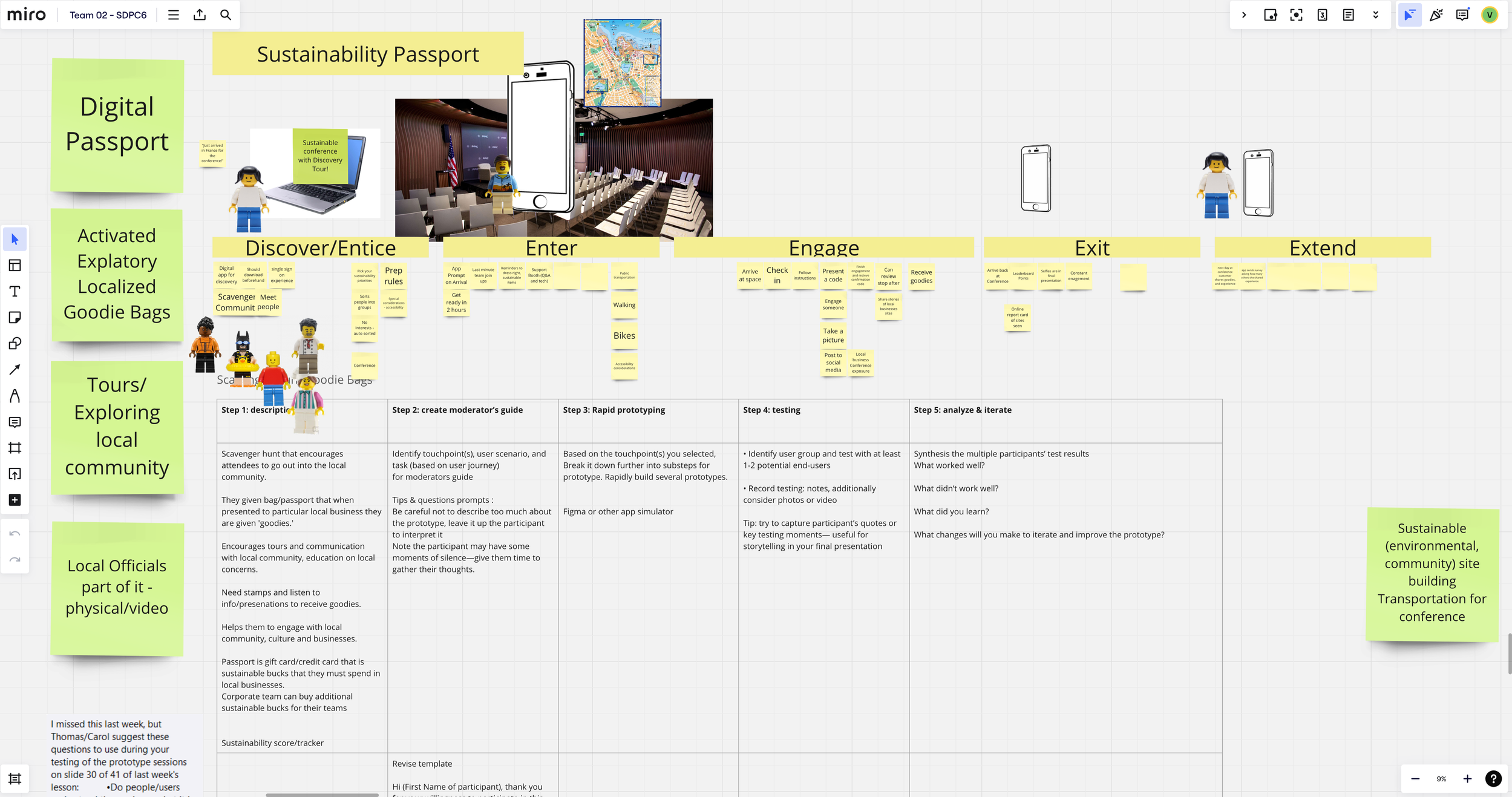
We facilitated a co-design workshop jam session that helped generate over 40 ideas. Below you will see how those ideas were clustered into common areas such as business incentives, conference logistics, scavenger hunt exploration and more.
Prototyping and Testing
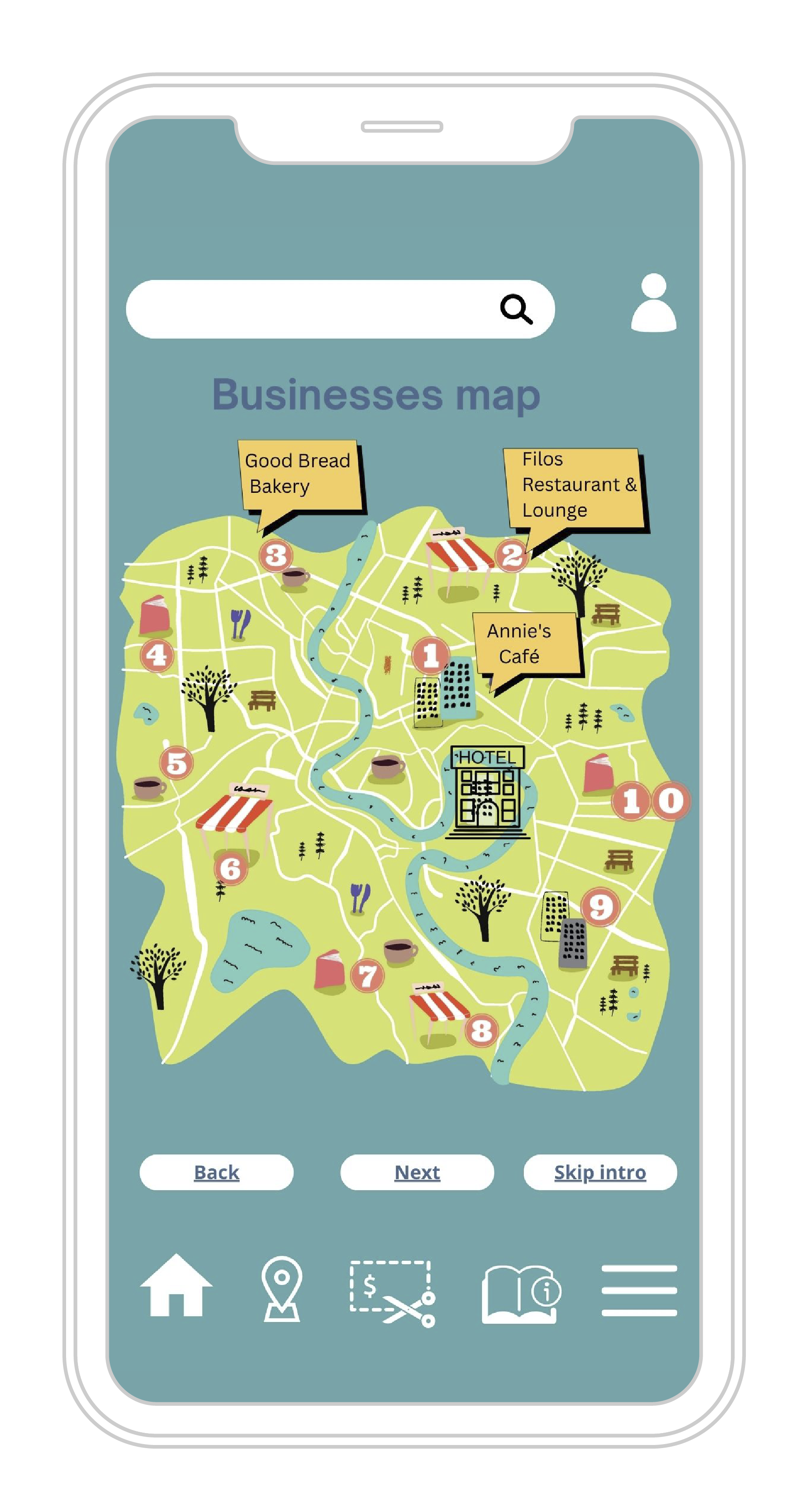
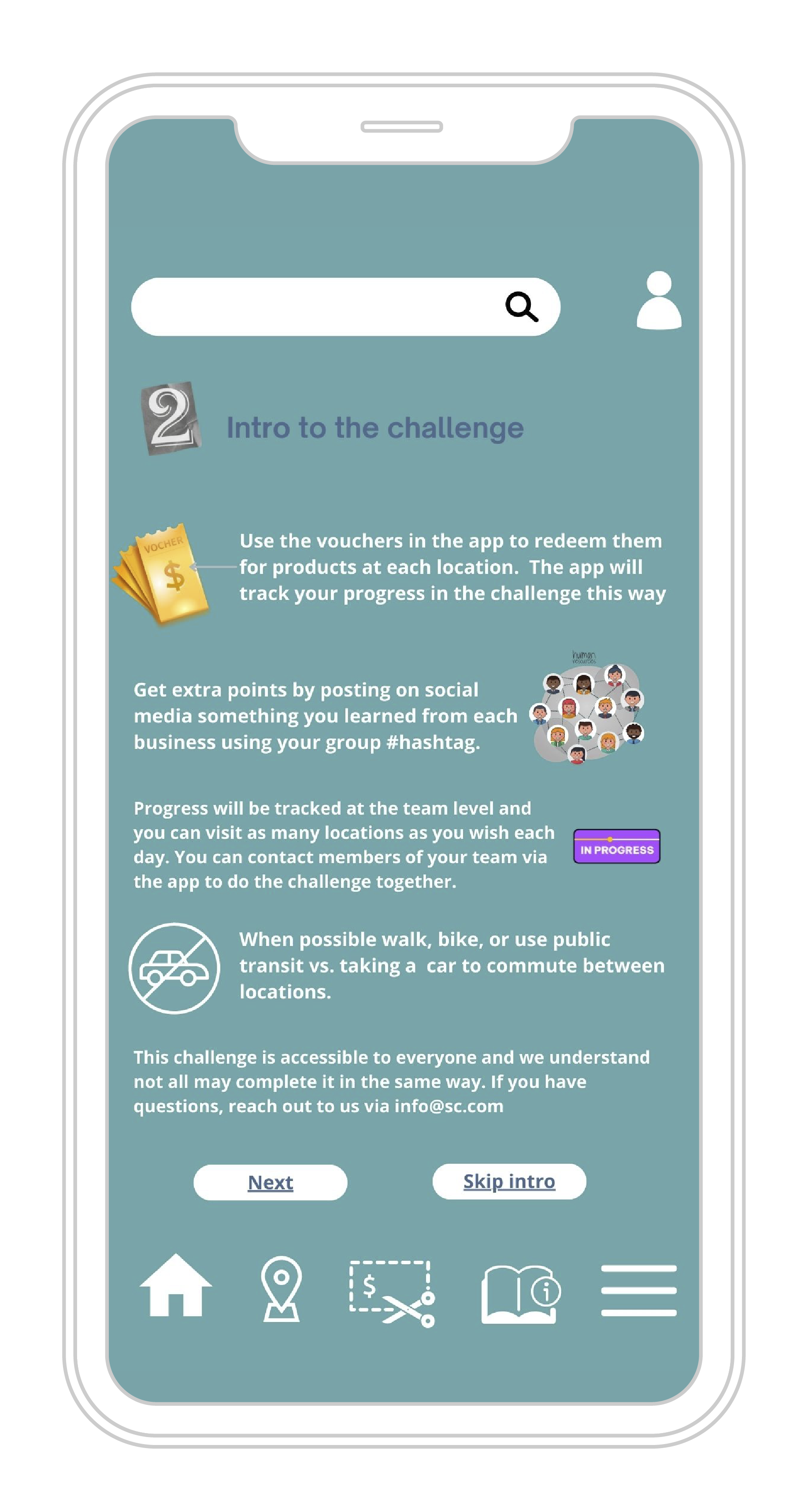
Based on the ideas generated during the co-design session we selected a few to prototype and test. Low-fidelity, experiential prototypes were tested:
Eco Scavenger Hunt App: Gamified exploration of local businesses with sustainable challenges.
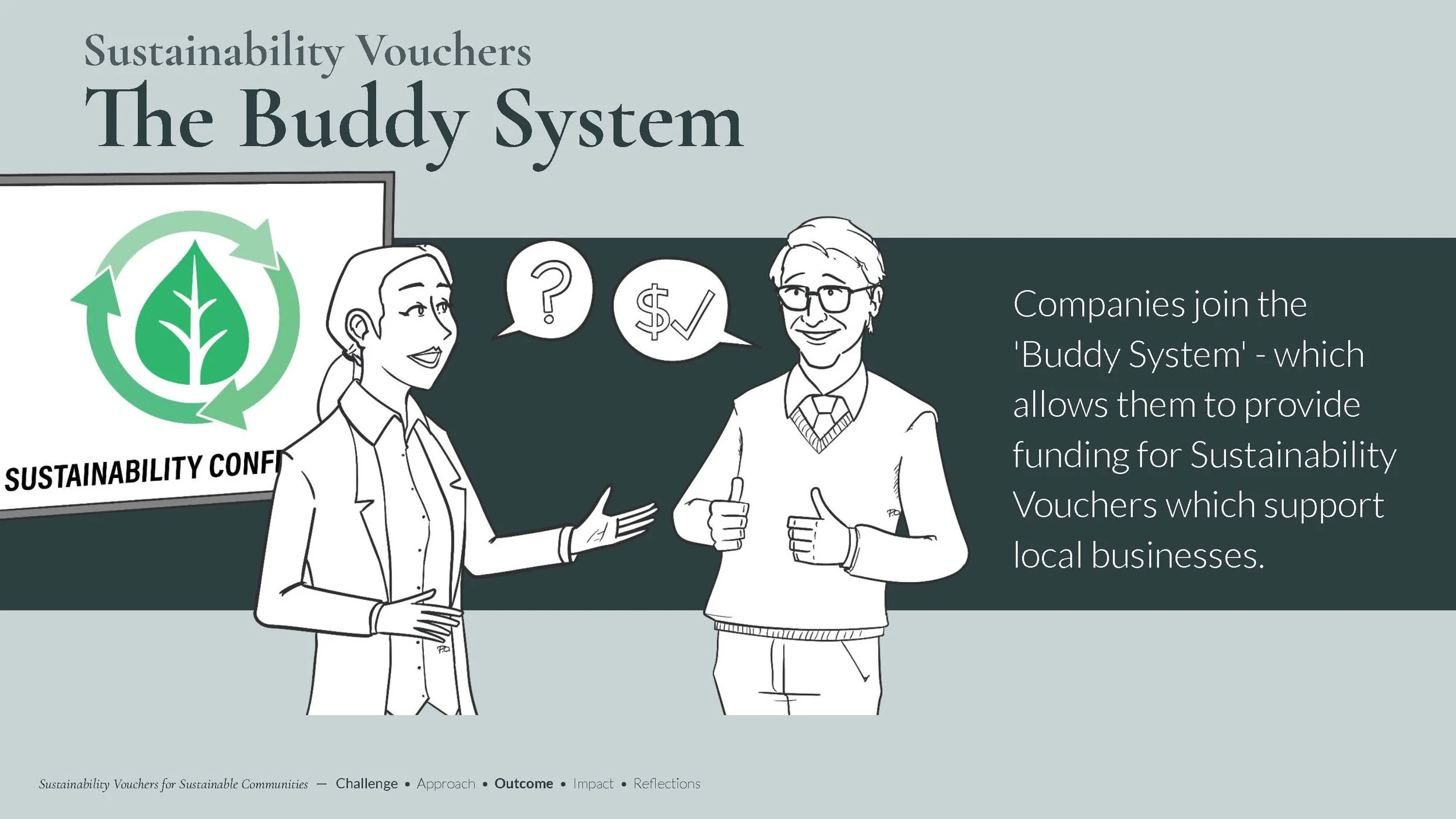
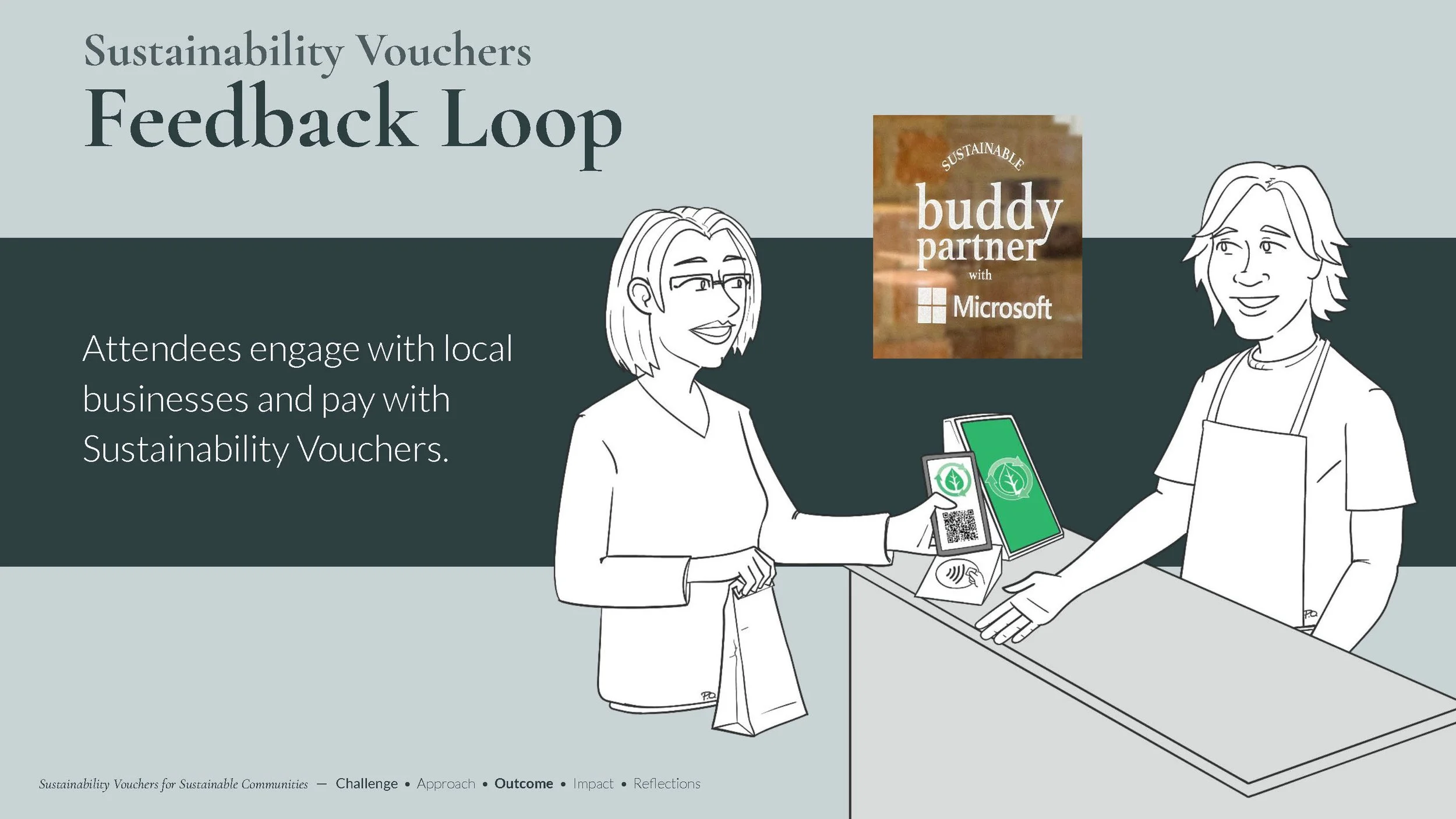
Voucher / Business Buddy Program: Corporations partner with local businesses to sponsor digital vouchers redeemable by conference attendees.
Service Blueprint (Future State)
Click to enlarge.
The Outcome
Sustainability Vouchers for Sustainable Communities
The Voucher/Business Buddy System was our chosen concept:
Corporations sponsor conferences and partner with vetted local businesses.
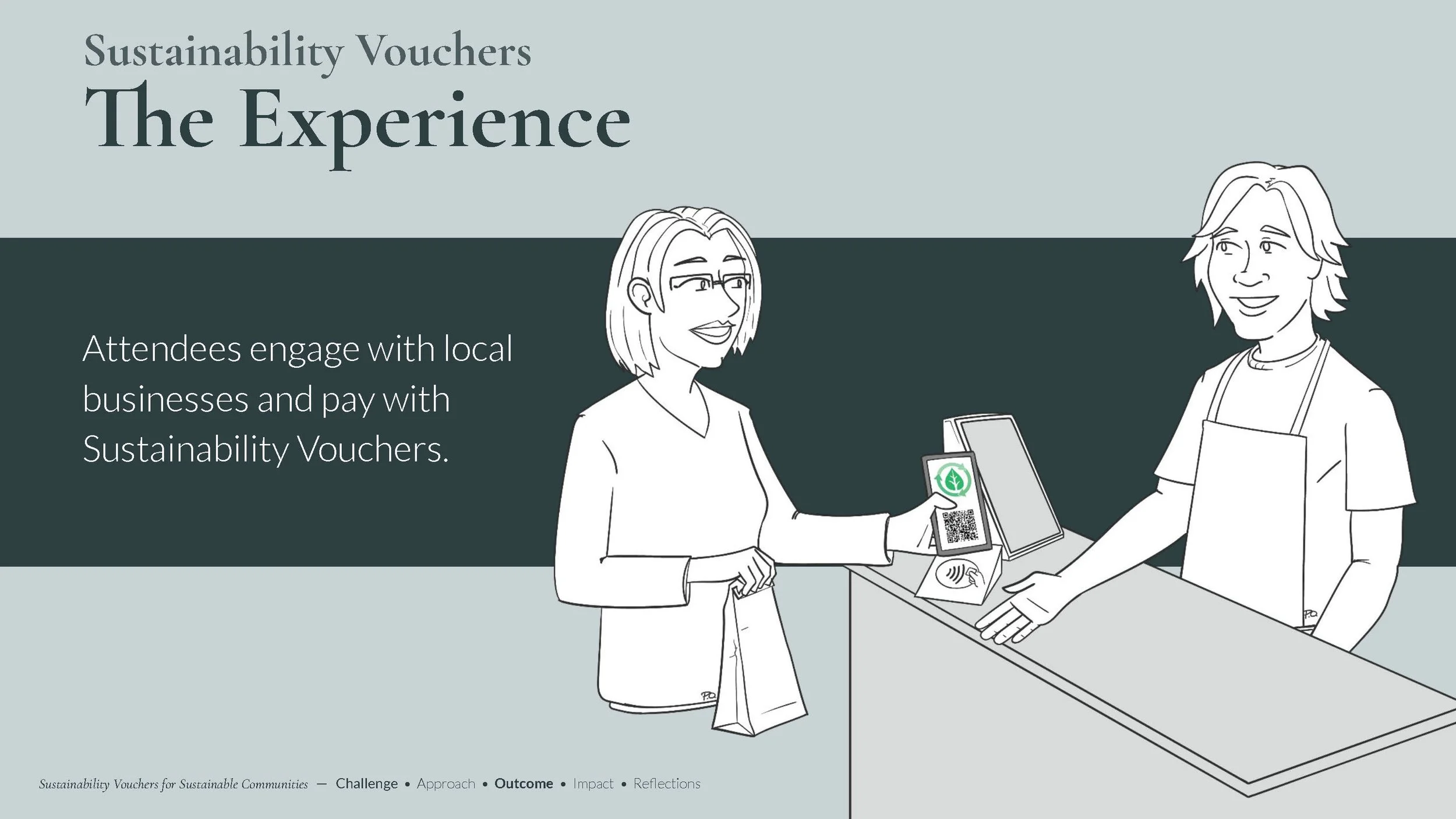
Attendees receive vouchers to spend at local establishments that align with sustainable and cultural values.
Local businesses gain exposure and support.
Governments benefit from economic circulation and sustainable engagement.
This model enhances corporate responsibility, local empowerment, and tourism equity.
The Impact
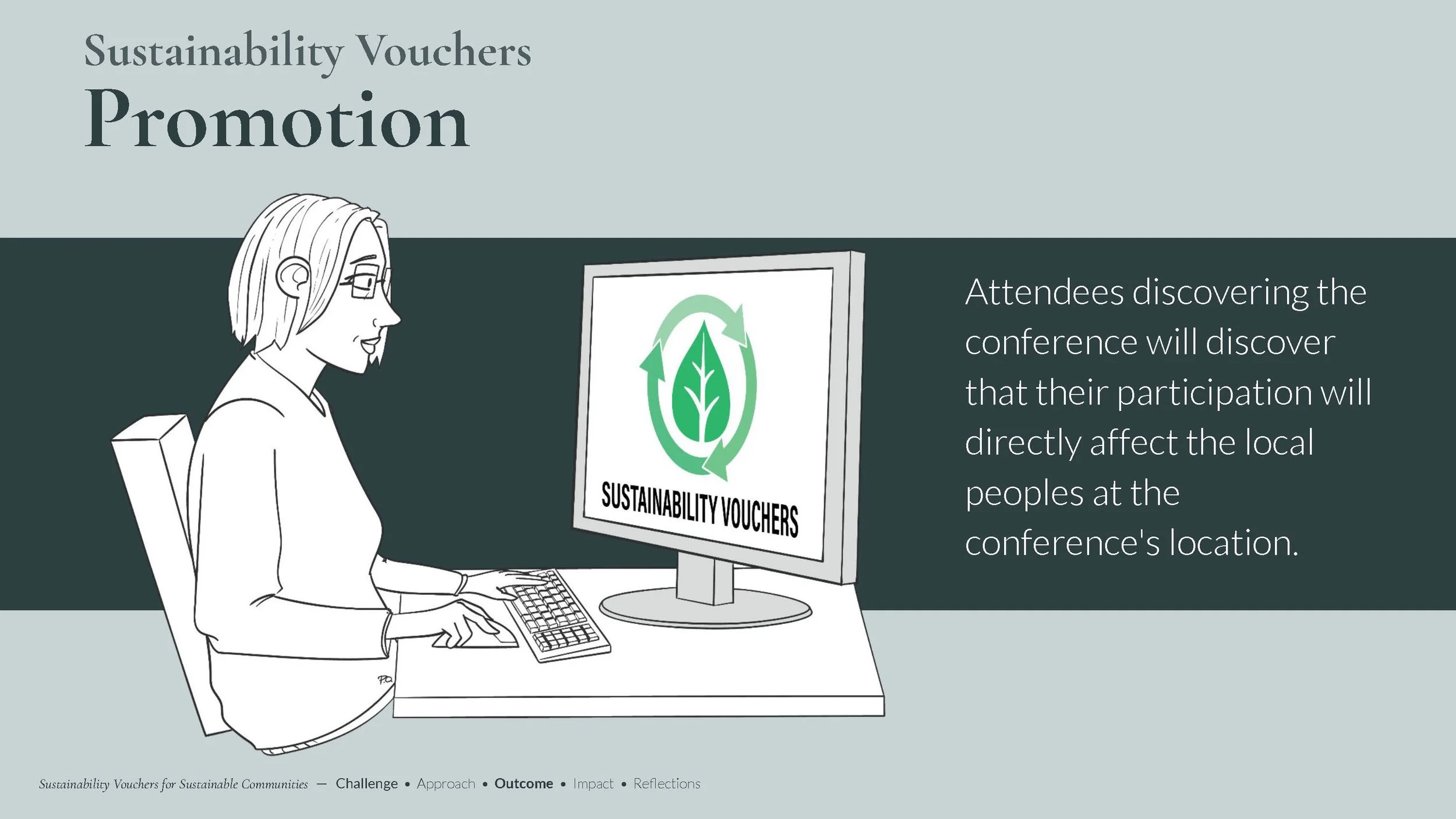
Our service has the potential to create positive impact on the local community, government and businesses through increased investment, taxes and collaboration.
Reflections
We found we could have narrowed and simplified our concept early on. The best solutions don’t always have to be complicated (or an app).
Suspend expectations until you have sufficient data. This idea was reflected in the reframing of the original challenge presented to us.
Government can be incentivized by both acknowledgement and revenue. Sometimes the government just wants to be seen, like everyone else.